
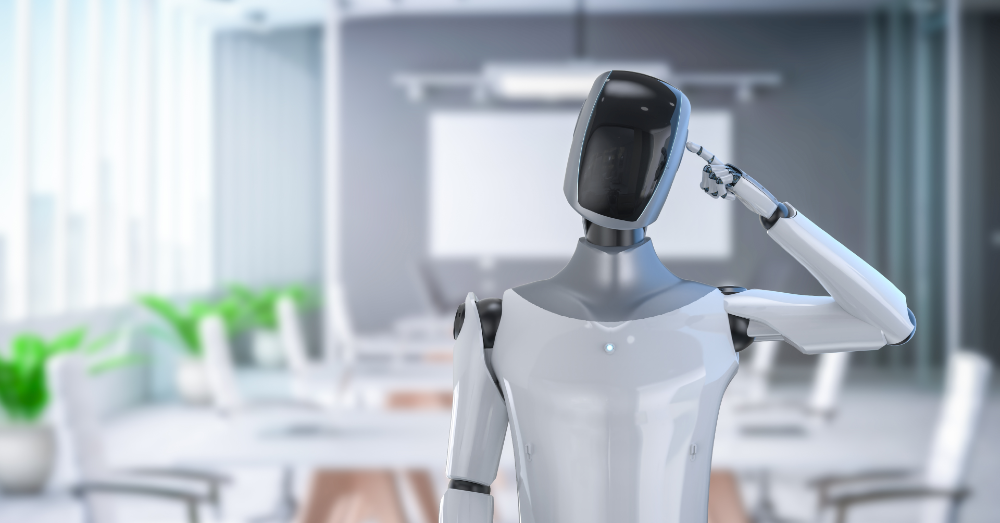

Will humanoid robots take your job and do things that you can’t? It’s not time to fret just yet, these robots aren’t ready for world domination just yet.
You’ve seen viral videos in which humanoid robots blink and scan rooms with eerie precision. But here’s what those polished demos don’t tell you about battery life, safety concerns, and why your local factory isn’t rushing to hire robot workers just yet. We break down the gap between social media hype and what robotics experts actually see happening in warehouses and homes.
Maybe there are other things to worry about
Various robot demonstrations have taken place in the past few years, showing how much the robotics industry has grown and developed over the years. Using industrial automation, a Chinese team created a life-like robot head that looks around the room, expresses various emotions, and shows very believable behavior. Instead of worrying that a robot like this could take your job, you might be more concerned that some people would become attracted to robots when a full human-form machine is created. This might be the worst-case scenario for these machines.
What about robots taking jobs?
Some robots have already begun taking jobs, but most of these are not humanoid robots. The automotive industry utilizes various robots to perform repetitive tasks that would require three full-time shifts of humans to get the job done. These robots aren’t where much of the robotics industry is going. The models that look like humans will likely be used for various interpersonal tasks in the future, but that could still be more than twenty years from now. Still, the robot head made by the Chinese team looks extremely realistic, and for some, it’s a bit disturbing to see a robot head with so many advanced facial expressions.
What are the limitations of robotics?
As much as we expect artificial intelligence to be like science fiction movies, there are limitations. Computer programming has come a long way, but all machines are still limited to their programming and the potential functions included. Just because teams have gotten together to develop much more dynamic and in-depth coding for machines doesn’t mean a robot can perform tasks outside of the installed programming. This is the limitation of artificial intelligence, and it will continue to be that way, regardless of what science fiction has tried to tell us.
Robots in manufacturing
Manufacturing robots aren’t the same as humanoid robots. That said, the Tesla Optimus is a little different. This is a humanoid robot developed by Tesla to perform general-purpose, repetitive, unsafe, or dull tasks in the real world. This robot project was announced at AI Day in 2021 and has been shown as early prototypes during demonstrations in 2022 and 2023. Despite its human-like appearance, the Tesla Optimus bot is still not ready to take over where humans continue to perform with thought, reason, and creativity.
Atlas has been in development for decades
Boston Dynamics has created Atlas, which is the world’s most dynamic humanoid robot. It is designed to handle real-world applications and builds on decades of research and development. This makes the Atlas robot the most capable, useful mobile robot in existence right now. It is intended as an emergency services robot, used in search and rescue operations, performing dangerous tasks such as shutting off valves, opening doors, and operating powered equipment in dangerous environments. When humans can’t go into an area, Atlas is on the job, going in and handling the situation. This helps to save lives and doesn’t require a person to give up their life to save others.
Is Atlas better than Optimus?
Actually, neither of these robots is better than the other. Atlas is made to handle specialized high-risk applications to go where people cannot, while Optimize is made for everyday tasks and is useful in many cases. This puts these two robots in a tie as far as their usefulness. Despite them being humanoid robots, neither will be mistaken for an actual human, but the head made by the Chinese robotics team could easily become a full human robot with future development and programming.
The human head robot that was developed in China is making people a little uncomfortable, but facial expressions are only part of mimicking actual human activity. People don’t have much to worry about yet, but humanoid robots have been developed to be useful in ways that would only endanger humans or cause serious physical issues after long-term repetitive work.