
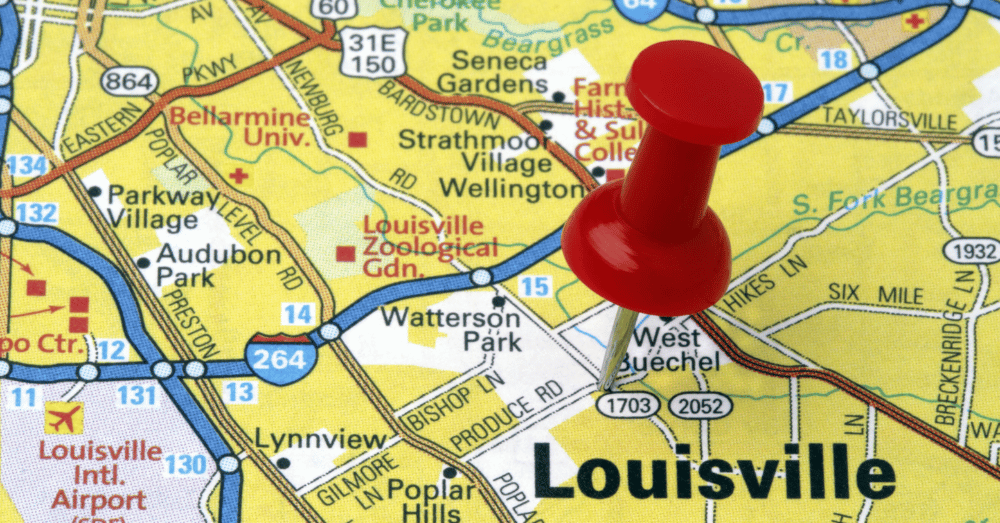

Kentucky’s largest city is about to make history. A massive 400-megawatt data center campus is coming to Louisville, KY, marking the state’s first hyperscale facility and putting this Ohio River city on the same playing field as tech giants Northern Virginia and Phoenix. While the billion-dollar investments rolling into established hubs grab headlines, Louisville’s story shows how midwestern cities are becoming serious contenders in America’s digital arms race.
- PowerHouse Data Centers and Poe Companies are building Kentucky’s first hyperscale facility on 154 acres in Louisville, with 400 MW capacity and a multi-billion dollar price tag expected by late 2026.
- The project will create 300-400 high-paying tech jobs and nearly 1,000 construction positions, thanks to Kentucky’s new 50-year tax exemption program for Jefferson County data centers.
- Northern Virginia still dominates with 4,900 MW of capacity as the world’s largest market, while Phoenix saw 67% inventory growth in 2024, making it the fourth-largest U.S. market.
Why Louisville Got the Call
Data center developers don’t throw around billions of dollars randomly. They need three things that Louisville, KY, happens to have in abundance: cheap power, plenty of water, and room to grow. The Louisville facility sits right next to the LG&E Cane Run power plant, giving it direct access to some of the cheapest electricity in the eastern United States. That matters when you’re planning to use enough power to run 400,000 homes.
The Ohio River doesn’t hurt either. With 75 billion gallons flowing past Louisville every day, there’s more than enough water to cool the thousands of servers that will process AI queries, store cloud data, and handle everything from your Netflix stream to ChatGPT responses. Tech companies like Google, Amazon, and Microsoft need this kind of setup for their hyperscale operations.
But here’s what really sealed the deal: Kentucky lawmakers passed a 50-year sales tax exemption on equipment purchases. When you’re buying computer hardware that costs millions and needs replacing every few years, that tax break adds up fast.
How Louisville Stacks Up Against the Heavy Hitters
Northern Virginia’s “Data Center Alley“ makes Louisville look like a rookie by comparison. Loudoun County alone hosts more than 300 data centers with 6 gigawatts of demand. The region grew 500% between 2015 and 2023, and there’s another 5,500 MW in the planning stages. We’re talking about $203 billion in total investments and more than 12,000 operational jobs.
Phoenix tells a different growth story. Arizona’s main metro area already hosts 125 or more data centers, and developers just announced a $33 billion industrial park in Pinal County that would span 3,300 acres. The desert location offers low disaster risk, renewable energy options where nearly half of local power comes from carbon-free sources, and 20-year sales tax exemptions that mirror Kentucky’s approach.
Louisville’s 400 MW campus falls somewhere between a startup and an established player. The facility is smaller than Phoenix’s mega-projects but bigger than most regional facilities. The real question is whether Kentucky can attract follow-up projects. State officials are already working on 20 potential data center deals, according to LG&E and KU representatives.

The Midwest Finds Its Digital Voice
What makes Louisville’s entry worth watching is the shift it represents. For years, data centers clustered in three zones: Northern Virginia with its proximity to government contracts and internet exchange points, Silicon Valley near the tech companies, and Phoenix with cheap land and power. But those markets are getting crowded, expensive, and a bit played out.
Midwestern cities like Louisville offer something different. Lower costs, less competition for land, and state governments hungry for economic development. Kentucky is making its move alongside Ohio, Indiana, and Michigan, which are all chasing data center investments with similar tax packages.
The Louisville project breaks ground in 2025, with the first 130 MW coming online by October 2026. Construction crews expect to number close to 1,000 at peak build-out. Once operational, the facility will employ 300-400 people in tech and security roles, most of them pulling six-figure salaries.
There are concerns, naturally. Environmental groups worry about the massive power consumption and whether Kentucky’s grid can handle additional data centers without passing costs to residential customers. Some neighbors near the Camp Ground Road site question whether the economic benefits will reach their communities. And there’s the bigger picture issue of whether building more fossil fuel infrastructure makes sense when climate concerns keep mounting.
What This Means for Tech’s Future Geography
The race for data center dominance is really a race to position regions for the AI boom that everyone’s betting on. Every major tech company is pouring money into AI infrastructure, and those AI models need somewhere to run.
Northern Virginia’s dealing with the consequences of success. Residents are pushing back against more development, utilities are struggling to build enough transmission lines, and available land is getting scarce. Phoenix faces water concerns despite its growth. Louisville has room to expand, water to spare, and politicians eager to make deals happen.
The next few years will show whether Louisville’s investment pays off. If the first facility attracts a major hyperscaler—the smart money says Google, Meta, or Microsoft—and if that leads to more projects, then Kentucky might just become a serious player in America’s digital infrastructure map. If the facility stands alone, Kentucky will still have one impressive data center and a lot of expensive power infrastructure to maintain.
Taking Stock of the Digital Shift
Right now, three different growth patterns are playing out across America’s data center markets. Northern Virginia represents the mature, possibly oversaturated model where growth is bumping up against physical and political limits. Phoenix shows the sun belt expansion story where cheap energy and available land attract massive investments despite environmental concerns. And Louisville represents the midwestern opportunity play, where second-tier cities use aggressive incentives to grab a piece of the action.
All three approaches have merit. All three face challenges. But the fact that Louisville is entering this race at all tells you something important about where tech infrastructure is headed. The days of clustering everything in Silicon Valley are over. Success now goes to wherever the power is cheap, the water is plentiful, and the politicians are willing to make a deal.