
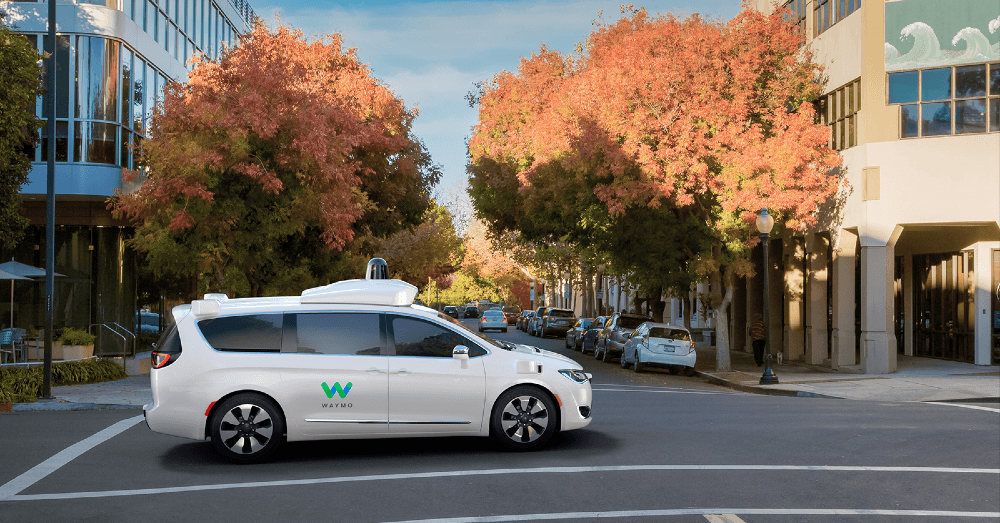

For years, the driverless car felt like a science fair project that never quite graduated. That’s changing. Robotaxis are picking up paying passengers in a growing list of U.S. cities, fleets are expanding overseas, and federal regulators are rewriting decades-old rules to make room for cars with no steering wheels. Yet anyone watching closely can see the technology is still wobbling through a tricky middle stage where ambition outpaces what the streets, the laws, and the public are ready to handle.
- Waymo now serves more than 1,400 square miles across 11 U.S. cities and is aiming for 1 million rides per week by year’s end.
- The Department of Transportation is rolling out new rules to modernize safety standards built before driverless cars existed.
- Public trust remains low, with only 13% of Americans saying they’d ride in a fully autonomous car.
Robotaxis Are Scaling Faster Than Expected
The clearest sign that autonomy has left the lab is Waymo’s growth curve. The Alphabet-owned company announced a big expansion of its autonomous robotaxi service area, growing to over 1,400 square miles across 11 US cities, an estimated 27% increase from its previous coverage and more territory than the entire state of Rhode Island. Waymo says it has performed 20 million trips since the service began and is targeting around 1 million rides a week by the end of 2026, four times its current volume.
To get there, the company is cutting costs. Its new vehicles, made by China’s Geely, cost much less to build than earlier Waymo cars made by Jaguar and others, and require fewer pricey cameras and sensors than the previous Jaguar I-PACE vehicles. A $16 billion funding round earlier this year is bankrolling new factories and international launches in London and Tokyo.
Waymo isn’t alone. WeRide’s global robotaxi fleet reached about 1,300 vehicles as of April 30, 2026. Tesla has begun limited ride-hailing in Austin and the San Francisco Bay Area, and commercial fleet operators are testing autonomous driver kits in everything from compact sedans to Mercedes Sprinter vans used for airport shuttles and last-mile delivery routes. The use cases keep multiplying, even if the maps remain narrow.
Safety Wins and Persistent Worries
Supporters of driverless tech keep coming back to one number: more than 40,000 people die each year on U.S. roads, most in crashes caused by human error. Early data suggests autonomy can help. Monitored deployments have shown reductions of 86% in property damage and roughly 90% in injury claims, with AI systems cutting down on human error factors like distraction and reaction time. Rare edge cases still present risks that require human oversight.
Those edge cases are where things get bumpy. Last December, during a power outage in San Francisco, an observer filmed lines of Waymo robotaxis stopped in their tracks. Traffic lights had gone dark, and with no clear signal on how to proceed, the vehicles froze in place. Earlier rollouts produced even more awkward moments. AVs were spotted driving into emergency response scenes because they didn’t know what a fire truck or a fire hose was.
Public opinion reflects that hesitation. A February 2025 AAA survey showed that only 13% of U.S. drivers said they would trust riding in an autonomous vehicle, up slightly from 9% in 2024, while about 6-in-10 drivers report feeling uneasy about getting in a self-driving car.
The Regulatory Maze
Washington is finally catching up, but the process is messy. The U.S. Department of Transportation plans to propose three new rules in spring 2026 to update outdated safety standards for vehicles with automated driving systems. The updates focus on vehicles built without steering wheels or pedals, and one rule would modernize requirements for how transmissions shift and how vehicles start and stop.
On Capitol Hill, Representatives Bob Latta and Debbie Dingell released the SELF DRIVE Act of 2026, which would be the first federal statute dedicated to the safety of autonomous vehicles. The current cap on the number of vehicles a manufacturer may deploy under a testing permit is 2,500 per year, and companion legislation would raise that cap to 90,000, a 36-fold increase.
Critics worry the bills lean too heavily on self-certification and vague safety language. Supporters argue the current patchwork of 34 different state laws, some permissive, some restrictive, and often incompatible, is slowing American firms while Chinese competitors expand.
The Road Ahead for Driverless Travel
Self-driving cars have crossed a real threshold. They’re picking up passengers, logging serious mileage, and forcing lawmakers to rewrite rulebooks built around the assumption of a human at the wheel. But scaling from a few hundred square miles in sunny cities to nationwide, all-weather, all-conditions transportation is a different challenge entirely. The next few years won’t decide whether autonomy works. They’ll decide how fast we’re willing to trust it.