


Your phone’s battery used to die by lunch. Your laptop barely made it through a meeting. Now? Devices run all day, and some electric cars go 400+ miles on a single charge. The difference isn’t just bigger batteries; it’s smarter battery management working behind the scenes.
- Smart monitoring prevents the three battery killers: overcharging, overheating, and cell imbalance that traditionally cut battery life in half
- Active balancing redistributes power between cells: keeps every cell healthy instead of letting weak ones drag down the whole pack
- Thermal control stops dangerous runaway reactions: maintains safe temperatures even during rapid charging or heavy use
Remember when you had to carry a phone charger everywhere? When laptops died during important presentations? Those days are mostly behind us, thanks to something most people have never heard of: battery management systems.
A BMS is basically your battery’s brain and bodyguard rolled into one. It watches every cell, monitors temperatures, and makes thousands of micro-adjustments every second. When done right, it can make a battery last three times longer than it would on its own.
What Actually Kills Batteries (And How BMS Stops It)
Batteries die from three main causes: overcharging, overheating, and cell imbalance. Think of a battery pack like a chain; it’s only as strong as its weakest link.
Without management, some cells charge faster than others. The strong cells hit 100% while weak ones sit at 80%. Over time, this imbalance gets worse. The weak cells can’t keep up, and eventually the whole pack fails.
Modern BMS prevents this by actively moving energy around. When one cell gets too full, the system shifts that excess power to cells that need it. It’s like having a smart waiter who makes sure everyone at the table gets fed evenly.
Temperature matters too. Heat speeds up the chemical reactions inside batteries, but not in a good way. A battery that runs hot will lose capacity fast. Some research shows that keeping a lithium battery just 10 degrees cooler can double its lifespan.
Electric Vehicles Show What’s Possible with Battery Management Systems
Electric vehicles push battery management to its limits. We’re talking about managing thousands of individual cells, each one monitored constantly for voltage, temperature, and performance.
Tesla’s approach is particularly clever. Their BMS learns from millions of miles of real driving data. It knows that most people charge at home overnight, so it can slow down the final charging phase to reduce heat. It understands that highway driving differs from city driving and adjusts accordingly.
The latest EV systems use wireless monitoring. Instead of heavy copper wires connecting every cell, they use radio signals. This cuts weight (which means more range) and eliminates potential failure points. Texas Instruments developed one system that can monitor up to 14 cells wirelessly with millisecond precision.
Here’s something interesting: many EV batteries get “retired” when they drop to 70-80% capacity. But with good BMS oversight, these batteries can work perfectly in home energy storage for another 10+ years. The management system just adjusts its expectations.
Your Phone Has Gotten Surprisingly Smart
Smartphone BMS has become incredibly sophisticated. Your phone doesn’t just manage the battery; it predicts your usage patterns and adjusts power accordingly.
iPhones, for example, learn when you typically wake up and start charging slowly overnight, finishing just before your alarm. This reduces heat buildup and chemical stress on the battery. Android phones do similar things, often delaying the final charging phase until you actually need the device.
Gaming phones face unique challenges because high-performance processors generate serious heat. Some phones now route power around the battery during intense gaming, running directly off the charger to prevent heat damage to the cells.
The charging speeds we see today—0 to 50% in 15 minutes—would have destroyed older batteries. Modern BMS makes this possible by carefully controlling current flow and monitoring cell temperature in real-time.
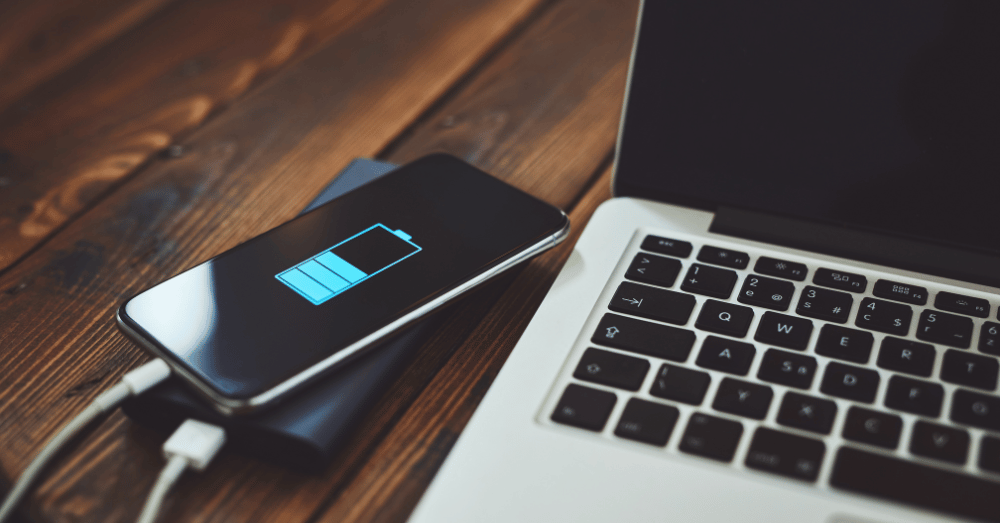
Laptops Balance Performance and Longevity
MacBooks use something called a System Management Controller that goes way beyond basic charging. It coordinates power delivery to the processor, display, and other components while protecting the battery.
If you typically use your laptop plugged in all day, the system learns this pattern. It might charge to 80% quickly, then wait until right before you usually unplug to finish charging. This reduces the time spent at 100% charge, which stresses lithium cells.
Business laptops often include “battery saver” modes that limit charging to 60% for people who are always near power outlets. This can make the battery last 5+ years instead of the typical 2-3 years.
Protecting Battery Longevity: The Temperature Challenge
Managing heat might be the hardest part of battery management. Lithium batteries work best around room temperature. Too hot, and they degrade quickly. Too cold, and they can’t deliver full power.
Smartphones use passive cooling: heat spreaders and the metal frame act as radiators. Laptops add fans when needed. Electric vehicles use full liquid cooling systems, just like a car’s engine.
Some advanced systems use materials that change phase (solid to liquid) to absorb excess heat. When the battery gets hot, the material melts, soaking up thermal energy. When things cool down, it solidifies and releases the heat slowly.
Cold weather creates different problems. Lithium batteries can be permanently damaged if you try to charge them below freezing. Good BMS prevents this by refusing to charge until the cells warm up, sometimes using small heaters built into the pack.
Safety First
Early lithium batteries occasionally caught fire or exploded. Modern BMS makes this virtually impossible through multiple safety layers.
If any cell overheats, the system can isolate it from the rest of the pack. If current gets too high, it cuts power instantly. If voltage goes outside safe limits, it shuts everything down. The whole system is designed to fail safely.
Electric vehicle BMS goes further, communicating with crash detection systems. In an accident, the BMS automatically disconnects high-voltage systems to protect emergency responders.
What’s Coming Next for Battery Management Systems
The BMS market is expected to hit $23 billion by 2035, driven mainly by electric vehicle adoption. But the technology is moving toward AI-powered systems that can predict battery needs before problems develop.
Some experimental systems use “digital twins,” which are virtual models that simulate battery behavior. These can spot developing problems weeks before they become serious, allowing preemptive maintenance or replacement.
Solid-state batteries, which promise higher energy density and better safety, will require completely new management approaches. The BMS will need to monitor mechanical stress instead of liquid electrolyte conditions.
The Invisible Revolution
Battery management systems represent one of those quiet revolutions that make modern life possible. Your phone lasts all day not because the battery is bigger, but because it’s managed better. Electric vehicles work because thousands of cells operate in perfect harmony.
The next time your laptop charges faster than expected or your phone still works after three years, thank the BMS working in the background. These systems are the unsung heroes making our increasingly electric world actually work.
As batteries become more important—from personal devices to grid-scale energy storage—BMS technology will only get more critical. The same systems protecting your smartphone today are laying groundwork for tomorrow’s energy infrastructure.