
LEGO dropped a surprise at CES 2026 that caught everyone off guard. The Danish toy company just unveiled Smart Bricks, a tech upgrade that makes your LEGO builds light up and react to how you play with them. No screens required, no complicated setup, and yes, the bricks still snap together like they always have. This is LEGO’s biggest move into connected tech, and it’s arriving in stores March 1st with three Star Wars sets.
- LEGO Smart Play was announced at CES 2026 and includes chips embedded in bricks and minifigures that allow builds to emit lights and sound effects as you play.
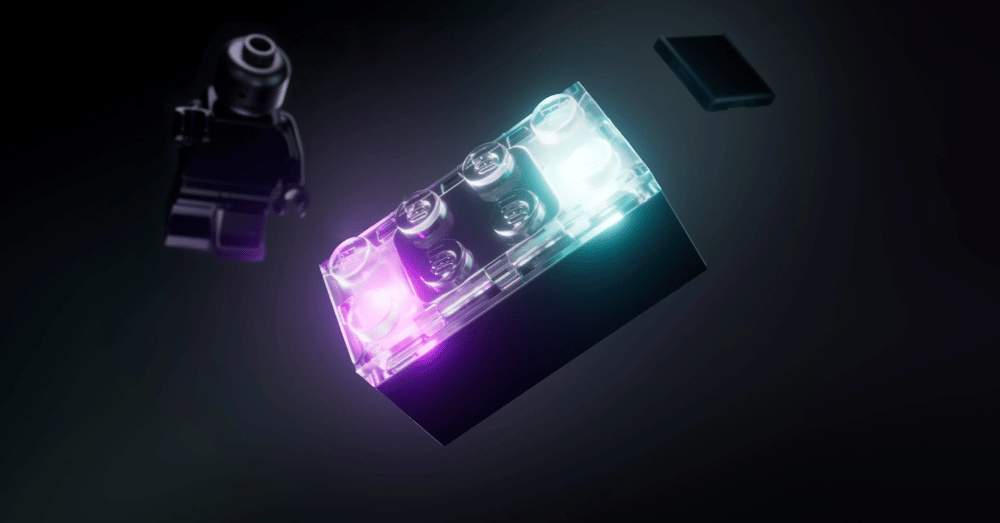
- The Smart Brick contains a custom-made chip measuring smaller than a standard LEGO stud, along with sensors, accelerometers, light sensing, and a miniature speaker.
- Smart Bricks will launch March 1, 2026, initially only in six countries: the US, UK, France, Germany, Poland, and Australia.
What Makes LEGO Smart Bricks Different
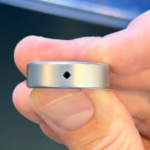
Smart Bricks look like normal LEGO bricks but have a chip inside that can sense movement, touch, light, and sound. That tiny chip, measuring just 4.1mm in diameter, is smaller than a LEGO stud. But don’t let the size fool you. Inside that standard 2×4 brick sits enough tech to detect when you’re moving it through the air, which direction it’s facing, and even how close it is to other Smart Bricks.
Smart Tags are 2×2 studless tiles with individual digital IDs that tell the Bricks and Minifigures how to act using near-field magnetic positioning, along with a miniature speaker, accelerometer, and LED array. Drop a Smart Tag on a helicopter build, and the brick knows to make rotor sounds. Swap it for a car tag, and suddenly you’re hearing engine revs and tire screeches.
LEGO developed a Bluetooth-based protocol called BrickNet that allows multiple Smart Bricks to recognize each other and operate together. Two kids playing with different ships can have them interact with each other. Fire lasers from an X-Wing at a TIE Fighter, and both ships will react with appropriate sounds and behaviors.
Star Wars Gets Smart First
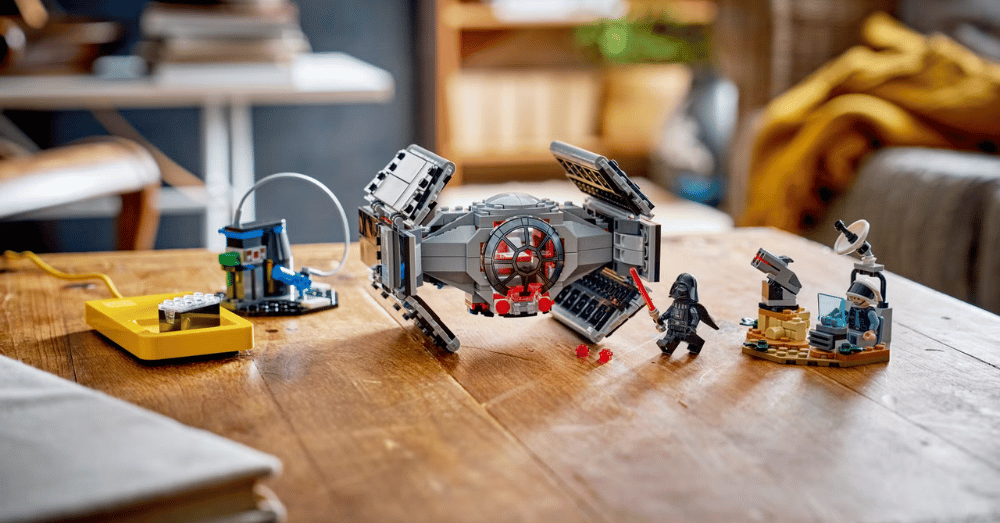
Smart Play launches with three LEGO Star Wars sets: Luke’s Red Five X-Wing, Throne Room Duel & A-Wing, and Darth Vader’s TIE Fighter. Whether you’re in Indianapolis or anywhere else in the US, you can pre-order these sets now and get them when they ship in March.
Darth Vader’s TIE Fighter is a 473-piece set with a Smart Darth Vader Minifigure, one Smart Brick and one Smart Tag for $70, while Luke’s Red Five X-Wing is a 584-piece set with two Smart Minifigures, one Smart Brick and five Smart Tags for $100. The biggest set, Throne Room Duel & A-Wing, includes 962 pieces with three Smart Minifigures, two Smart Bricks and five Smart Tags for $160.
You can hear the screech of a TIE Fighter when you move it through the air, or the crackling of lightsabers when they clash. The throne will play the “Imperial March” when Emperor Palpatine is seated. These aren’t pre-recorded voice clips either. A synthesizer module inside the Smart Brick generates the noises from scratch.
No App, No Problem
What sets this apart from most smart toys? There’s no setup required to pair the elements of the Smart Play system, and there are no screens involved. You open the box, snap the bricks together, and start playing. Done.
While an app isn’t necessary to play, any firmware updates and diagnostics can only be run via the LEGO SMART Assist app. But that’s just for occasional updates, not daily play. The batteries should still perform even after years of inactivity, and multiple bricks can be charged wirelessly on a shared charging pad.
Battery life runs around 45 minutes of active play, though the bricks automatically go to sleep when not being used. You’ll get more mileage in real play sessions where you’re not constantly manipulating every brick.
How They Work Together
Playing with a car build makes the sound of a revving engine, and when driving it faster and more aggressively, the engine makes more noise. Tilting the car causes screeching sounds as if taking corners hard. It’s all about how you’re physically interacting with the build.
A Smart Tag tells the brick to take on characteristics for a lightsaber battle, and when you place the Minifigures in the mount, you’ll hear a lightsaber humming to life. Moving the characters around and crashing them together produces battle sounds. Knocking a Minifigure off its spot triggers their signature sound of defeat.
Each ship has lasers you can activate, and firing enough shots while aiming at another ship will eventually cause it to play exploding sounds. Minifigures associated with the ship will also make sounds of dismay. Kids can dogfight their ships together, with real back-and-forth action.
Is this LEGO Worth the Wait?
LEGO’s Creative Play Lab team spent years developing the technology behind responsive physical play. They filed at least 25 patents, and at its peak, the production line for the Smart Brick alone stretched as long as seven school buses with around 160 workstations.
You can swap pieces between different sets, which keeps the creativity that makes LEGO great. Once you’ve got Smart Bricks and Tags, you can use them however you want. You’re not locked into specific sets. Non-Star Wars builds shown at CES demos included a helicopter, dinosaur, colored ducks, a birthday cupcake, and a robber’s getaway car.
Prices run higher than standard LEGO sets, but not wildly so when you consider the tech inside. And unlike most smart toys that need constant app interaction, these encourage the kind of hands-on, imagination-driven play LEGO has always been about.